
- Our baseline GDP growth forecast stands at 4.8% for 2026
- Inflation is forecast at 1.5%
- A K-shaped growth pattern is expected to persist
- We assess fundamentals and cyclical dynamics in the AI-related tech sector, and the property sector
- We also examine Taiwan’s trade, supply chain, and wealth diversification outlook

Related Insights
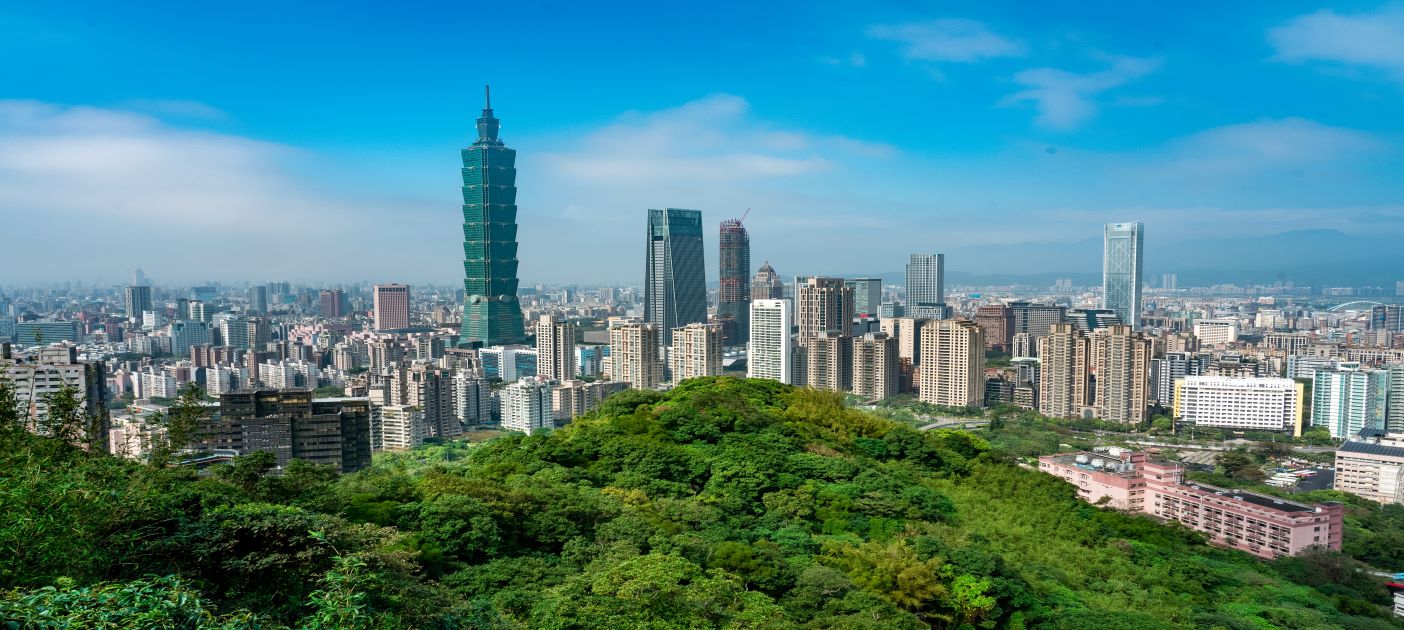
Macroeconomic outlook 2026
GDP growth
Taiwan’s economy has delivered a strong performance this year, buoyed by the global AI boom despite headwinds from tariff uncertainties and FX volatility under the Trump 2.0 administration. GDP growth is projected to reach 7.2%, the highest level since the post-global financial crisis recovery in 2010, and among Asia’s top three together with India and Vietnam. Per capita GDP is expected to rise to USD 38,000, surpassing both Japan and South Korea for the first time in history.
Looking ahead, we outline three potential scenarios for 2026 and revise our base-case GDP growth forecast upward to 4.8%. This means Taiwan will remain the fastest-growing economy within the Asian NIEs next year, outperforming Hong Kong, Singapore, and South Korea.
Base case: Assuming AI-related demand remains strong but moderates from this year’s exceptional growth, US semiconductor tariffs are moderate, and US reciprocal tariffs on Taiwan are slightly reduced under a trade agreement, GDP growth is expected to be in the 4–5% range in 2026.
Bull case: If the AI-driven technology cycle evolves into a sustained supercycle, US semiconductor tariffs remain exempted, and US reciprocal tariffs are significantly reduced, GDP growth could remain robust in the 6–7% range in 2026.
Bear case: If the AI cycle loses momentum, high semiconductor tariffs are imposed, and reciprocal tariffs remain unchanged, GDP growth could slow to 2–3%.
The K-shaped economy is expected to persist in 2026, reflecting a continued divergence between tech and non-tech sectors.
Tech: The tech sector is expected to continue seeing strong exports and investment in 2026. The ongoing global AI race will continue, though momentum will likely moderate from 2025’s exceptional pace amid more realistic profitability expectations, stretched equity valuations, and rising corporate leverage. Meanwhile, the US semiconductor tariff rate is expected to be moderate, and exemptions are expected to be offered to companies that commit to investing in the US, given the strong lobbying power from US tech companies that want to avoid disrupting AI sector development.
According to TrendForce, total capex from the global eight major cloud service providers is forecast to grow 40% yoy to USD 602 billion in 2026, on top of 65% in 2025. WSTS projects global semiconductor revenue to grow 26.3% to USD 975 billion in 2026, similar to 22.5% in 2025. On the local side, TSMC indicated in its October earnings release that its capex will remain elevated at USD 40–42 billion in 2025 and is unlikely to decline significantly over the next several years, supported by ongoing AI-driven demand for advanced process technologies.
Non-tech: Non-tech manufacturing sectors are expected to remain weak with negative export growth. Reciprocal tariff challenges will remain. Despite ongoing legal challenges, the Trump administration retains Plan B options—such as Section 122 and Section 301—to maintain tariffs against major countries. The ongoing Taiwan–US trade negotiations may help lower reciprocal tariff rates on Taiwan but are unlikely to eliminate them entirely.
Meanwhile, China’s domestic economy remains sluggish, weighed down by local government debt overhang, property market decline, deflationary pressures, and demographic headwinds. This will continue to weigh on Taiwan’s exports of non-tech industrial goods in 2026.
The construction sector is expected to remain under pressure in 2026, consistent with a soft-landing trend in the domestic residential property market. With the central bank’s continued credit controls and a softening labor market, the property market is unlikely to see a quick recovery.
Service sectors are expected to show mixed performance in 2026. Consumer-related services are likely to rebound modestly thanks to the government’s cash handout program to support consumption and domestic demand. However, the rebound will likely be capped by softening labor market conditions. Meanwhile, the financial sector is expected to deliver mixed results, given the continued slowdown in bank loan growth, potential risks of equity market correction, and, on the other hand, reduced pressure on insurance companies related to currency appreciation and FX hedging.
Monetary policy
We now expect the central bank to keep the policy discount rate unchanged at 2.00% through 2026. As GDP growth remains above the trend rate of 3%, the central bank is unlikely to see a strong case for rate cuts. With CPI inflation projected to remain subdued at 1.5% — driven by slower wage growth and mild imported inflation — there is also little justification for hiking rates. To support non-tech manufacturing industries affected by US tariffs, the central bank is likely to continue providing liquidity support through open market operations.
Regarding macroprudential measures, selective credit controls aimed at cooling the property market and preserving financial stability are expected to remain in place. Despite sharp declines in property transactions and construction activity, property price adjustments and affordability improvements remain limited. Furthermore, real estate loan growth has slowed only modestly, with the real estate loan concentration ratio remaining above the central bank’s comfort zone of 35–36%. The central bank is therefore expected to maintain current LTV limits and loan concentration caps for an extended period.
Structural developments
From a longer-term perspective, Taiwan retains significant structural advantages, including its strategic geographic location, business-friendly environment, high-quality workforce, robust infrastructure, and established ICT ecosystems. Taiwan ranks 6th globally and 3rd in Asia in the IMD 2025 World Competitiveness Index, 15th globally and 5th in Asia in the World Bank 2020 Ease of Doing Business Index, and 10th globally and 3rd in Asia in the IMD 2025 World Digital Competitiveness Index. With these enduring strengths, Taiwan is well positioned to further expand its strong ICT manufacturing base to capture the global AI wave while exploring new growth opportunities in technology-intensive manufacturing and knowledge-based service sectors.
The external environment is increasingly complex and challenging due to US trade protectionism, US-China geoeconomic tensions, and potential tensions in the Taiwan Strait. In response to these external challenges, Taiwan will need to further pursue a diversification strategy to increase economic resilience, including trade diversification, supply chain diversification, and wealth diversification.
ICT sector
Taiwan’s ICT sector has strong fundamentals and is well positioned to benefit from AI-related hardware demand in the global market. The island has one of the world’s most comprehensive and mature ICT supply chains, supporting every stage of AI infrastructure development — from advanced chip manufacturing and server ODMs to power supply components and cooling systems. According to TrendForce, Taiwanese foundries account for 70% of the global chip foundry market for 16/14nm and more advanced process nodes. Meanwhile, news reports indicate that Taiwanese ODMs contribute to roughly 90% of global AI server production, underscoring the island’s critical role in the global AI hardware ecosystem.
During the ongoing AI boom, global technology companies are aggressively pursuing first-mover advantages to secure technological leadership and sustain long-term competitiveness. Major countries are also engaged in a strategic race for AI supremacy, seeking economic, political, and military advantages. They generally rely on Taiwan for AI-related hardware supply.
From a cyclical perspective, Taiwan’s AI-driven ICT growth is probably at a peak but is expected to remain strong into 2026. Taiwan’s ICT inventory-to-shipment ratio remains around 1.0, suggesting that demand and supply are roughly balanced. There are no signs of inventory destocking pressure in the near term.
US private investment in ICT has grown approximately 15% yoy, comparable to late-1990s levels, but the duration of this double-digit growth phase (2-3 years) is shorter than the five-year run observed during the dot-com era. In other words, US ICT investment shows signs of overheating but does not yet resemble the magnitude of the late-1990s dot-com bubble.
Challenges are likely to emerge beyond 2026. AI technologies remain in early and immature stages, with considerable uncertainty regarding market size and sustainability of returns. Gartner’s 2025 Hype Cycle for AI indicates that many AI technologies will require 2–5 years to reach the “plateau of productivity,” implying a test of AI’s commercial maturity in 2027–2030.
Meanwhile, the massive scale of AI-related investment is introducing financial complexities. Recent reports suggest global tech companies are shifting financing from cash to bonds, private credit, and asset-backed securities. This growing reliance on leverage heightens financial stability risks. If major central banks implement monetary tightening in 2027 or later, vulnerabilities may surface.
Real estate sector
Taiwan’s real estate sector faces fundamental challenges, but pockets of opportunity remain. The island’s population began declining in 2025 due to a persistently low birth rate and limited immigration inflows. With the home ownership ratio already high at around 90%, potential demand for self-use residential properties is limited.
However, the number of households continues to grow, accelerating to nearly 5% yoy in 2025. For the first time, the number of households has surpassed total housing stock. This trend is largely due to the rise of single-person households, nuclear families, and elderly individuals living independently, creating demand for smaller housing units tailored to specific living arrangements.
Housing quality remains subpar and requires significant upgrades. The median housing age is approximately 34 years nationwide and around 39 years in Taipei. Ongoing urban renewal initiatives, such as the Taipei West District Gateway Project, along with income growth and rising living standards, are expected to drive upgrade demand in the property market.
Urban expansion also continues to support property demand. The share of urbanized land in Taiwan increased from 43.0% in 2010 to 44.3% in 2024, with particularly rapid development in Taoyuan. Major infrastructure, industrial, and commercial projects—including the Taoyuan Aerotropolis development—are likely to create additional demand for both residential and commercial properties.
From a cyclical perspective, property market activity remains at the bottom and is likely to stay subdued in 2026. Both property transaction volumes and construction activity have declined sharply in 2025, approaching the magnitude of contractions seen during the 2000–2001 dot-com bubble burst, the 2008–2009 global financial crisis, and the 2014–2016 domestic property market tightening.
Property price adjustments — both Sinyi property prices for existing home sales and Cathay property prices for new home sales — have been limited, suggesting that home affordability has not improved significantly. Adjustments in real estate lending are also insufficient. Real estate loans (housing mortgages and construction loans) continued to grow around 4% yoy, still accounting for a high 36% of total bank lending. To curb property-related borrowing and encourage banks to reduce exposure, the central bank is unlikely to relax credit control measures in the near term.
Trade diversification
Taiwan has diversified its exports away from China in recent years. The US became Taiwan’s largest export market in 2024, driven by a surge in ICT shipments catering to AI-related demand. ASEAN-6 overtook China to become the second-largest export market this year, supported by strong ICT exports to Malaysia and Singapore. China has fallen to third place, reflecting persistent weakness in domestic demand and continued industrial overcapacity.
Looking ahead to 2026, exports to the US are expected to decelerate. US-bound non-ICT exports are already subject to a 20% reciprocal tariff. A Taiwan–US trade agreement could help reduce, but not eliminate, the reciprocal tariff. If the reciprocal tariff is ruled invalid by the US Supreme Court, the US administration could rely on Section 122 to maintain a 15% tariff for 150 days and may initiate Section 301 investigations to impose targeted tariffs on selected trading partners, potentially including Taiwan.
If the US introduces semiconductor tariffs, large Taiwanese tech companies in high-value-added segments — such as advanced semiconductors and AI servers — may obtain tariff exemptions by committing to US-bound investments. Companies in lower value-added segments, including mature technology semiconductors and consumer electronics, may face tariff pressure due to the difficulty of absorbing US investment and production costs.
Exports to ASEAN are expected to maintain relatively steady growth. The region is projected to sustain stable GDP growth in 2026, supported by strong intrinsic demand from a young population, a rising middle class, and continued public and private investment in infrastructure. ASEAN countries are actively expanding AI infrastructure, including Thailand’s data-center projects in Chonburi and Rayong and Malaysia’s projects in Johor and the Greater Klang Valley. Rising AI demand in the region is likely to continue driving Taiwan’s ICT exports to ASEAN. Singapore — currently the only ASEAN country with an Economic Partnership Agreement with Taiwan — will continue to see growing bilateral trade, supported by tariff-free market access.
Supply chain diversification
Taiwanese companies have also diversified supply chains away from China. Central and South America ranked as Taiwan’s top outward direct investment destination this year, supported by major companies such as TSMC increasing capital in subsidiaries in the British Virgin Islands and Samoa to mitigate currency appreciation pressures and FX hedging costs. ASEAN followed in second place, led by Singapore, Vietnam and Thailand, with growth driven by electronics projects, including semiconductors, PCBs, and consumer electronics. The US ranked third, buoyed by investments in semiconductors and AI servers.
Looking ahead, 2026 is expected to see rising investment into the US. To reduce reciprocal tariffs and secure preferential treatment under Section 232, the Taiwanese government has proposed a Taiwan model to strengthen Taiwan–US supply chain collaboration. Measures include financial credit guarantees, facilitating government-to-government cooperation to develop industrial clusters, and seeking US infrastructure support, aimed at encouraging Taiwanese companies to invest in the US.
Large tech firms are proactively pursuing US investment to gain exemptions from semiconductor tariffs. For example, TSMC has pledged to increase its US investment by USD 100 billion to build three new advanced chip fabs, two advanced packaging facilities, and one major R&D center. This is expected to encourage other Taiwanese suppliers and ecosystem partners — such as semiconductor equipment and materials providers and engineering vendors —to expand their US presence.
Investment into ASEAN is expected to remain active. Vietnam and Thailand are likely to continue attracting Taiwanese companies seeking to diversify electronics supply chains, supported by their established and expanding consumer electronics ecosystems. Singapore and Malaysia are expected to remain key destinations for Taiwanese companies pursuing semiconductor supply chain diversification, given their strengths in chip foundry and assembly/testing. ASEAN countries are also expected to maintain policy support, such as tax incentives and subsidies for strategic industry investment in Vietnam, and the development of special economic zones in Singapore and Malaysia, to attract FDI and enhance industrial competitiveness.
Wealth diversification
Taiwan is one of the world’s wealthiest economies, having accumulated substantial wealth through decades of tech sector expansion, persistent trade surpluses, and rapid development of its financial and property markets. Total financial assets reached TWD 360 trillion at the end of 2023, while net financial assets (financial assets minus liabilities) stood at TWD 54.3 trillion. Supported by a strong domestic equity rally, both figures are expected to have exceeded TWD 400 trillion and TWD 60 trillion, respectively, in 2025. Households and private enterprises hold roughly half of all financial assets, financial institutions nearly 40%, and the remainder is held by the public sector.
Wealth allocation has increasingly shifted toward foreign securities. Taiwanese investors’ foreign securities holdings reached TWD 43 trillion in 2023 — 12% of total financial assets, up from 5% in 2010 and just 1% in 2000. About half of this is held by insurance companies seeking higher returns to meet rising domestic payout obligations, while households, banks, pension funds, and other financial institutions also contribute meaningfully to outward securities investment.
Although foreign asset allocation remains concentrated in USD assets, diversification is gradually accelerating. According to US international investment position data, Taiwanese investors held USD 813 billion in long-term US securities at the end of 2024. Under Taiwan’s international investment position, portfolio investment assets totaled USD 1.5 trillion, alongside USD 581 billion in foreign exchange reserves. As a result, the share of US assets—around 40%—has declined from roughly 50% in 2011.
The full set of alternative destinations for Taiwan’s outward securities investment is not identifiable, but available data from the Securities Investment Trust & Consulting Association indicate that investment trust portfolios have increasingly shifted toward developed European markets in recent years.
Looking ahead to 2026, momentum for wealth diversification is expected to strengthen. Elevated volatility in Taiwan’s FX market this year has highlighted the risks that USD depreciation could pose to insurance companies with large US asset exposures and insufficient FX hedging. Rising concerns about US equity market overheating, long-term yield volatility, and USD credibility may also prompt both institutional and retail investors to accelerate diversification strategies. Other G10 markets, as well as selected emerging markets, are likely to become increasingly attractive alternative destinations.
Click here to read the full report

Ma Tieying 馬鐵英, CFA
Senior Economist - Japan, South Korea, & Taiwan 經濟學家 - 日本, 南韓及台灣
[email protected]To unsubscribe, please click here.
Topic
Explore more
E & S ChartbookGENERAL DISCLOSURE/ DISCLAIMER (For Macroeconomics, Currencies, Interest Rates & Digital Assets)
The information herein is published by DBS Bank Ltd and/or DBS Bank (Hong Kong) Limited (each and/or collectively, the “Company”). It is based on information obtained from sources believed to be reliable, but the Company does not make any representation or warranty, express or implied, as to its accuracy, completeness, timeliness or correctness for any particular purpose. Opinions expressed are subject to change without notice. This research is prepared for general circulation. Any recommendation contained herein does not have regard to the specific investment objectives, financial situation and the particular needs of any specific addressee. The information herein is published for the information of addressees only and is not to be taken in substitution for the exercise of judgement by addressees, who should obtain separate legal or financial advice. The Company, or any of its related companies or any individuals connected with the group accepts no liability for any direct, special, indirect, consequential, incidental damages or any other loss or damages of any kind arising from any use of the information herein (including any error, omission or misstatement herein, negligent or otherwise) or further communication thereof, even if the Company or any other person has been advised of the possibility thereof. The information herein is not to be construed as an offer or a solicitation of an offer to buy or sell any securities, futures, options or other financial instruments or to provide any investment advice or services. The Company and its associates, their directors, officers and/or employees may have positions or other interests in, and may effect transactions in securities mentioned herein and may also perform or seek to perform broking, investment banking and other banking or financial services for these companies. The information herein is not directed to, or intended for distribution to or use by, any person or entity that is a citizen or resident of or located in any locality, state, country, or other jurisdiction (including but not limited to citizens or residents of the United States of America) where such distribution, publication, availability or use would be contrary to law or regulation. The information is not an offer to sell or the solicitation of an offer to buy any security in any jurisdiction (including but not limited to the United States of America) where such an offer or solicitation would be contrary to law or regulation.
[#for Distribution in Singapore] This report is distributed in Singapore by DBS Bank Ltd (Company Regn. No. 196800306E) which is Exempt Financial Advisers as defined in the Financial Advisers Act and regulated by the Monetary Authority of Singapore. DBS Bank Ltd may distribute reports produced by its respective foreign entities, affiliates or other foreign research houses pursuant to an arrangement under Regulation 32C of the Financial Advisers Regulations. Where the report is distributed in Singapore to a person who is not an Accredited Investor, Expert Investor or an Institutional Investor, DBS Bank Ltd accepts legal responsibility for the contents of the report to such persons only to the extent required by law. Singapore recipients should contact DBS Bank Ltd at 65-6878-8888 for matters arising from, or in connection with the report.
DBS Bank Ltd., 12 Marina Boulevard, Marina Bay Financial Centre Tower 3, Singapore 018982. Tel: 65-6878-8888. Company Registration No. 196800306E.
DBS Bank Ltd., Hong Kong Branch, a company incorporated in Singapore with limited liability. 18th Floor, The Center, 99 Queen’s Road Central, Central, Hong Kong SAR.
DBS Bank (Hong Kong) Limited, a company incorporated in Hong Kong with limited liability. 11th Floor, The Center, 99 Queen’s Road Central, Central, Hong Kong SAR.
Virtual currencies are highly speculative digital "virtual commodities", and are not currencies. It is not a financial product approved by the Taiwan Financial Supervisory Commission, and the safeguards of the existing investor protection regime does not apply. The prices of virtual currencies may fluctuate greatly, and the investment risk is high. Before engaging in such transactions, the investor should carefully assess the risks, and seek its own independent advice.